
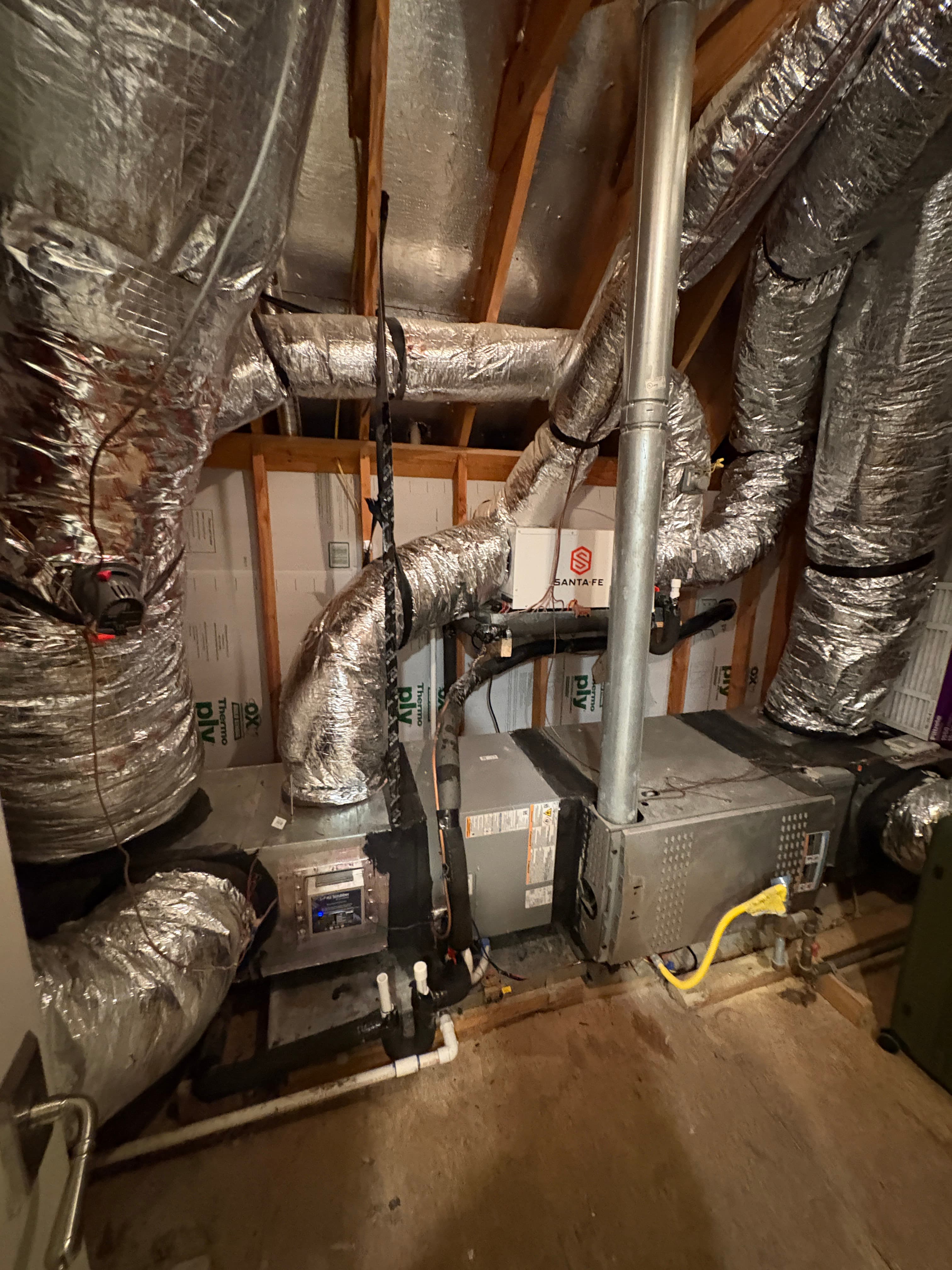
What a filter is actually doing
A filter is a mechanical strainer. Air passes through pleated media and particles above a certain size get caught in the fibers. That is the whole mechanism, and it does nothing to air that never passes through it.
It has two jobs. One is capturing dust before it circulates. The other, which nobody mentions, is keeping your evaporator coil and blower wheel clean. A coil packed with dust loses capacity and holds moisture, and in a Houston attic that is exactly the condition that leads to biological growth on the coil and the musty smell that follows.
MERV, and the tradeoff nobody mentions
MERV rates how small a particle the media captures. Higher MERV catches finer particles and creates more resistance to airflow, and your blower was sized for a specific amount of resistance.
Put a high MERV one inch filter in a system designed around a basic one and you can measurably reduce airflow across the coil. That shows up as a coil running colder than it should, ice on the refrigerant lines, longer run times, and a blower working harder than it was built to. We measure total external static pressure before recommending a filter.
Why a media cabinet beats a better one inch filter
If you want finer filtration, the durable way to get it is more surface area, not denser media. A four or five inch media cabinet holds a much larger pleated filter, so the same volume of air passes through more slowly and resistance stays reasonable while capture improves.
Those filters also last longer between changes. The tradeoff is physical: the cabinet needs room at the air handler or in the return, and not every closet or attic platform has it.
Fit and bypass matter as much as the filter
A filter only works on the air that goes through it. If there is a gap around the frame, air takes the easy path around the media and the rating on the box stops meaning anything. We check the filter track, the slot cover, and the cabinet seams.
Return leakage is the other bypass. If your filter sits at the return grille in the hallway, every opening between that grille and the air handler pulls unfiltered attic air straight to the coil.
What we check on a filtration call
- Filter size and fitWhether the filter seals in its track or air slips around the frame.
- Static pressureTotal external static at the air handler, before and after a filter change.
- Coil and blower wheelDust loading on the coil face and buildup on the blower blades.
- Return duct integrityOpenings that let unfiltered attic air reach the coil.
- Cabinet seamsGaps at the filter door and panel joints that create a bypass path.
- Change intervalHow fast your filter actually loads, based on runtime and household dust.