
What actually fails in a Houston attic
Flex duct sags between supports and traps air in the low spots. The inner liner tears or pulls loose at the collar. Foil tape releases in attic heat and the joint it was holding opens up. Ceiling boots separate from the drywall, so conditioned air goes into the attic instead of the room and attic air gets pulled in around the register.
Where the leaks are, and where they are not
Duct leakage is almost always at connections, not in the middle of a run. The supply plenum, the takeoff collars where branches leave the trunk, the boots at the ceiling, the return connection, and the cabinet itself account for most of it.
That is why a repair focused on connections outperforms one focused on wrapping everything in more tape. We find them by inspection, by feel with the system running, and by looking for insulation that has gone dark with the dust leaking air deposits.
How we repair, in order
Mechanical connection first. A joint has to be fastened and strapped before anything gets sealed, because sealant is not a structural product. Then mastic, brushed into the joint rather than taped over it. Foil tape has its uses, but mastic is what survives attic heat over years.
Then insulation gets restored over the repair, because a sealed but bare duct in a 130 degree attic is still losing capacity. Sagging runs get supported and straightened, and boots get resealed to the drywall so the register is actually connected to the room.
When repair stops making sense
There is a point where patching a duct system is throwing money at it. If the flex liner is deteriorating throughout, if the runs are undersized for the equipment, or if the layout itself is why the house was never comfortable, repairs will not get you there.
We will say so plainly and show you what we found. Replacing a system that is past repair is a design job, and it starts with a load calculation rather than a copy of the layout that failed. We work across Houston, Cypress, Katy, Spring, Baytown, Pearland, Richmond, La Porte, Texas City, Channelview, Crosby, and Dayton.
What we inspect on a duct repair call
- Plenum and takeoffsThe supply plenum and every branch collar leaving the trunk.
- Ceiling bootsWhether the boot is sealed to the drywall and the duct to the boot.
- Flex liner conditionTears, pull outs at the collars, and deterioration along the run.
- Supports and sagStrap spacing and low spots holding the duct out of shape.
- Insulation coverageCompressed, missing, or displaced insulation over the runs.
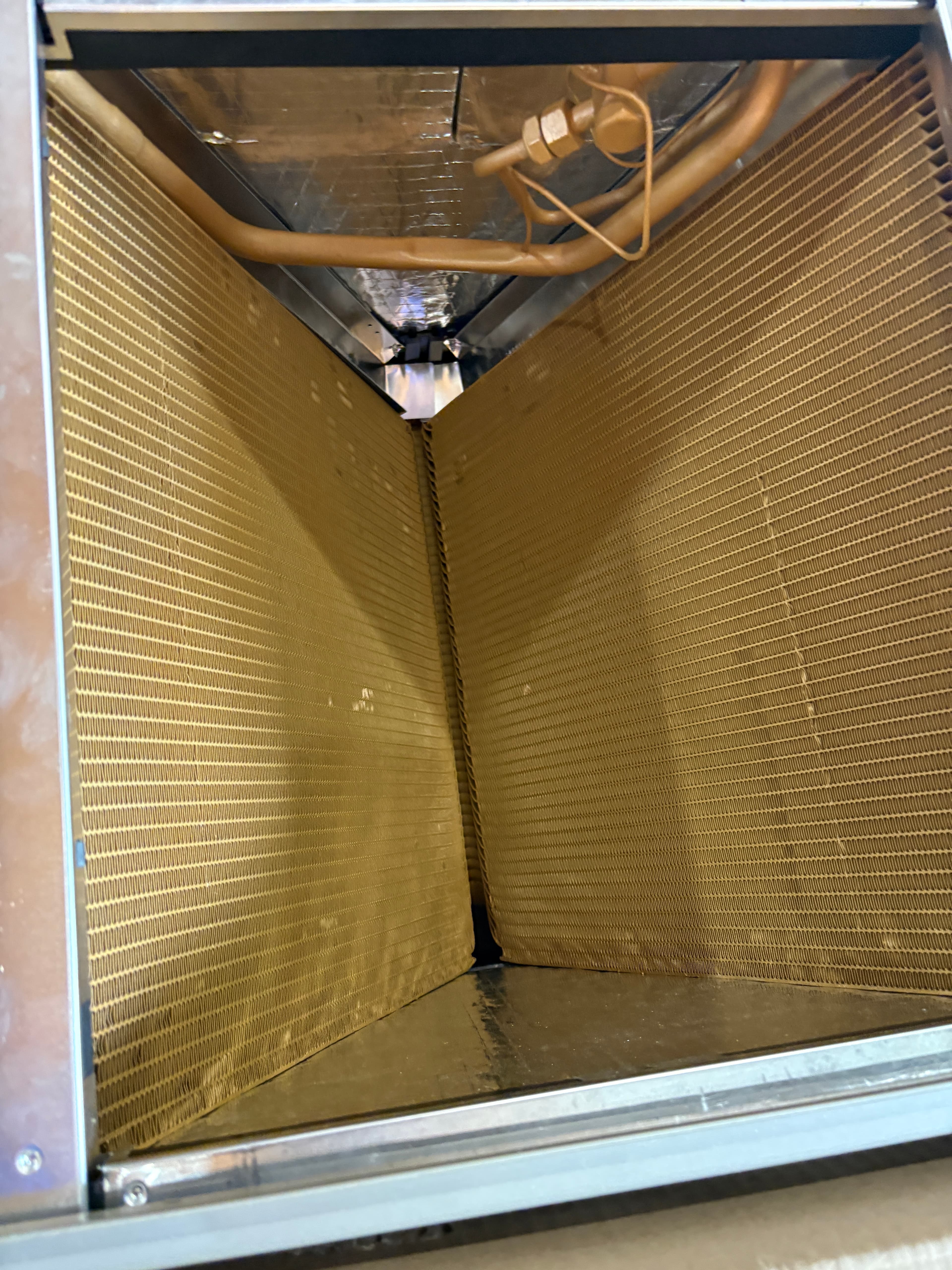
- Air handler cabinetFilter slot, panel seams, and the return connection.