
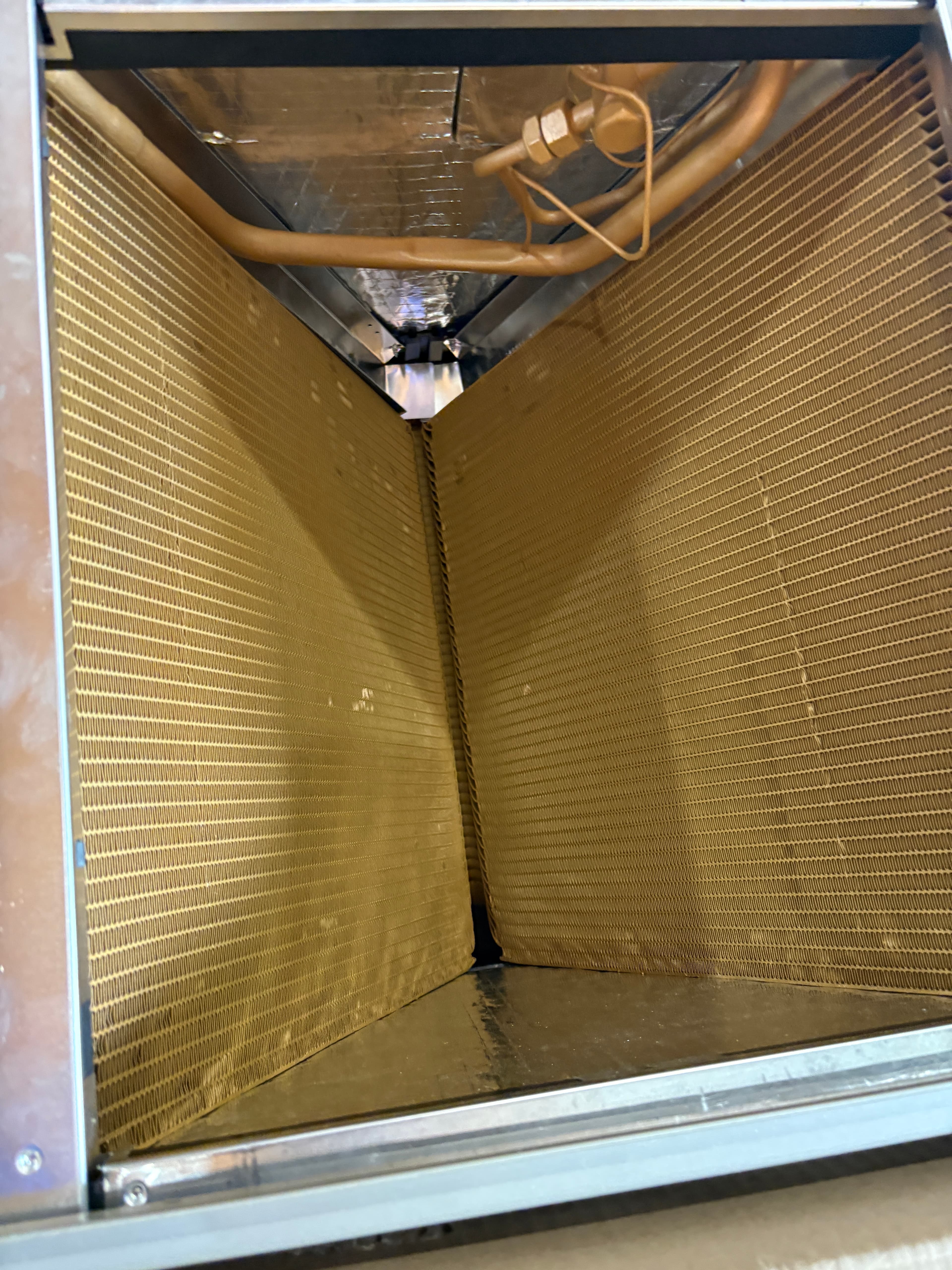
We measure before we replace parts
Most AC repairs come down to one failed component. The trouble is that very different failures look identical from your thermostat. A dead run capacitor, a burned contactor, a tripped float switch and a low refrigerant charge all end the same way: warm air out of the vents. Guessing is expensive, because the guess gets billed whether or not it fixed anything.
So the technician takes readings. Voltage and amp draw at the condenser. Superheat and subcooling on the refrigerant side. Temperature split across the indoor coil. Those numbers say which part failed and, more usefully, why. A capacitor that dies young usually has a motor behind it pulling harder than it should.
The failures we see most often here
Run capacitors lead the list. They sit outside in an unshaded metal cabinet through eight months of Gulf Coast heat, and heat is what kills them. Contactors are close behind. The contacts pit and burn until the compressor stops getting clean voltage, and then it either hums or does nothing at all.
After that it is condensate. Houston humidity means your coil pulls a lot of water out of the air, and that water leaves through a drain line that fills with sludge. When the line clogs, a safety switch shuts the system off on purpose. That is not a broken air conditioner. That is a safety device doing its job, and clearing it is a short visit.
Refrigerant is not something you use up
If your system is low on refrigerant, it leaked. Refrigerant is not consumed the way fuel is. Adding more without finding the leak buys you part of a season, and then you pay for the same refrigerant again.
We will tell you where it is leaking and whether the repair is worth doing on equipment of that age. Sometimes it clearly is. Sometimes the honest answer is that the system is close to finished.
What happens when we get there
The technician walks the whole system, indoor and outdoor, before quoting anything. You get told what failed, what the fix costs, and what your options are. If a repair is not the right use of your money, we say so.
We work out of 6607 Flintlock Rd in Houston and cover Cypress, Katy, Spring, Baytown, Pearland, Richmond, La Porte, Texas City, Channelview, Crosby and Dayton. Licence TACLA36229C.
What we check on a no cool call
- Thermostat and control signalConfirm the thermostat is calling for cooling and the low voltage signal reaches the equipment.
- Capacitor and contactorTest the run capacitor under load against its rating and inspect the contactor for pitted contacts.
- Refrigerant chargeRead superheat and subcooling rather than topping the system off and hoping it holds.
- Drain line and float switchClear the condensate line and verify a safety switch is not holding the system off.
- AirflowCheck the filter, the blower wheel and the temperature split across the indoor coil.
- Electrical pathCheck the breaker, disconnect and whip, then read amp draw on the compressor and fan motor.