
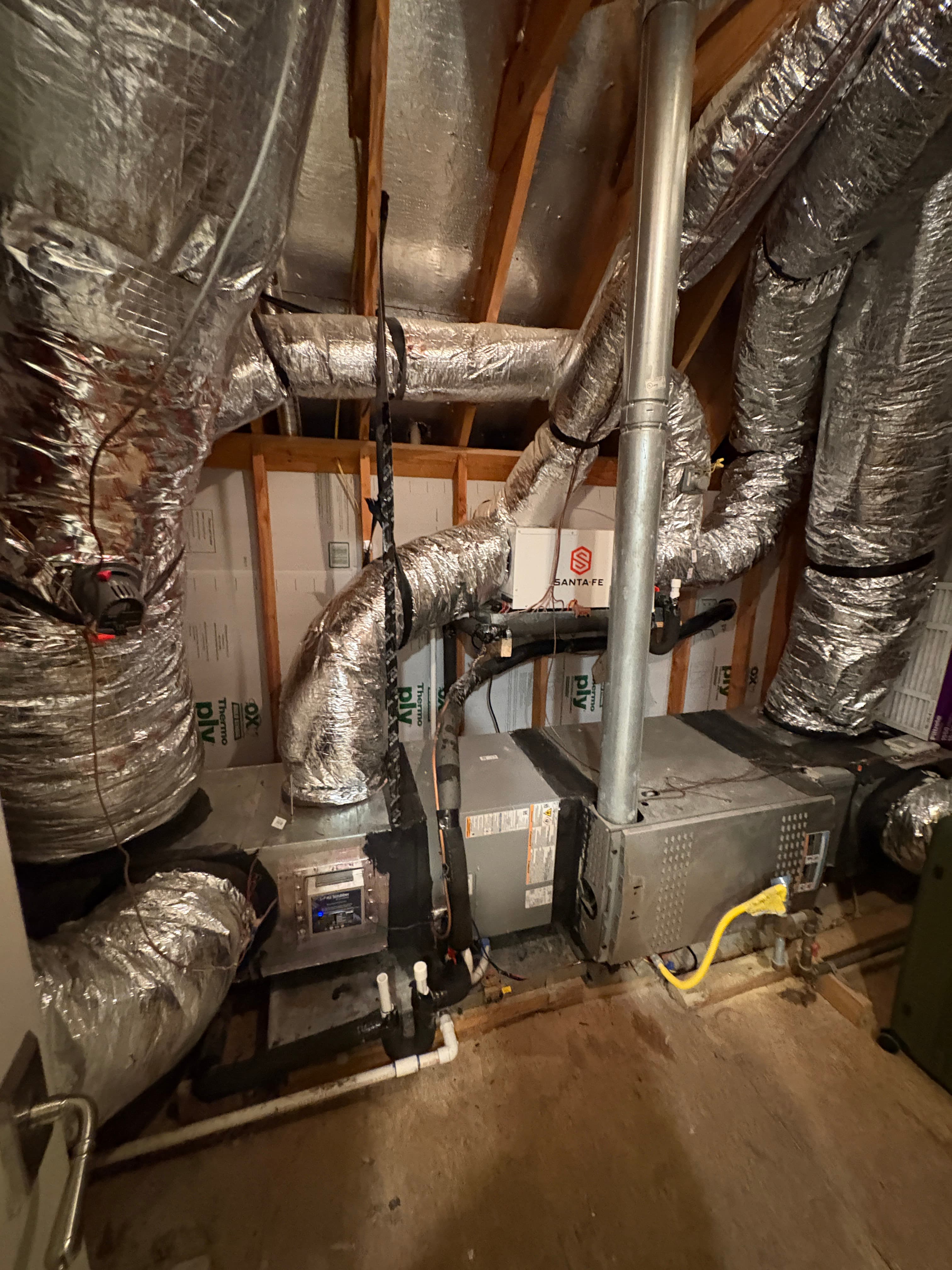
The first cold morning problem
Your rooftop units have been in cooling since March. The heat sections have not fired, the gas valves have not opened, and nobody has looked at a flue in months. Then a front comes through overnight and you learn which units still work by listening to which tenants call.
The fix is unglamorous and effective: fire every heat section in the fall, under load, before you need it. A heat section that will not light in October is a scheduling item. The same one in January is a cold building and a parts house that is out of stock.
What we work on
Gas heat sections inside rooftop package units, gas fired unit heaters and duct furnaces, makeup air units, electric heat in packaged equipment, and heat pumps with auxiliary electric heat. Billy's four years in commercial HVAC and the fabrication work that followed in Afghanistan mean equipment needing a part made rather than ordered is familiar ground.
If your building runs on hydronic boilers, tell us on the phone. We will be straight about which portion of that system is our work and which belongs with a boiler specialist, before anyone schedules a visit.
Combustion safety in an occupied building
Carbon monoxide risk in a commercial building differs from the residential version in one respect: the people in the space have no relationship with the equipment. They do not know where it is or when it was last serviced. That responsibility sits with the owner.
So we test rather than observe: heat exchanger condition, flue and vent integrity, since rooftop flues separate and corrode more than people expect, combustion air, gas pressure with every stage firing, and rollout and limit safeties proven to function. The carbon monoxide reading goes in the occupied space, not only at the unit.
Downtime, staging, and records
Most heating work can happen outside operating hours, and we are open 24 hours, seven days. Where a unit has to come out, we talk through temporary heat and stage the work so the building is never entirely without heat.
Each unit gets its own record: nameplate data, gas pressure, temperature rise, flame signal, carbon monoxide readings, and every repair. Across two seasons that record tells you which equipment is aging out, so it can be replaced on a budget cycle.
Fall startup check, per unit
- Heat exchanger and burnersInspected for cracks, corrosion, soot, and the debris that collects in equipment idle since spring.
- Flue, vent, and combustion airConnections, corrosion, slope, termination, and a verified source of combustion air for the space.
- Gas pressure under loadMeasured with every stage firing, because pressure that holds on one stage can fall away on two.
- Ignition and flame signalThe full sequence run from a cold start, with the flame signal the control board actually reads.
- Safeties provenLimit, rollout, and pressure switches tested to confirm they function, not just noted as present.
- Carbon monoxide in the spaceA reading taken in the occupied area as well as at the equipment, and written down.