
Sizing is the decision everything else hangs on
The common shortcut is to look at the old unit, match the tonnage and move on. That copies whatever mistake was made last time, and on the Gulf Coast the usual mistake is oversizing. An oversized system cools the air quickly and shuts off. Short runtimes look like success on a thermostat and feel like failure on your skin, because moisture removal only happens while the system runs.
We size from the house in front of us: square footage, ceiling height, window area and orientation, insulation, whether the ducts run through a 130 degree attic, and how the home is used. That takes longer than reading the old data plate. It is also the difference between a system you like and one you tolerate.
Your ducts are half the system
A new condenser bolted onto a leaking duct system is a new condenser with the same old problem. In most Houston homes the ducts run through the attic, and attic temperatures here routinely pass 130 degrees in summer. Every gap pulls superheated attic air into what you paid to cool.
Undersized or blocked returns are just as common. A system starved for return air runs cold, ices up and wears out the blower. We check duct condition, return sizing and static pressure before quoting equipment, because those numbers change which equipment is appropriate.
What installation day looks like
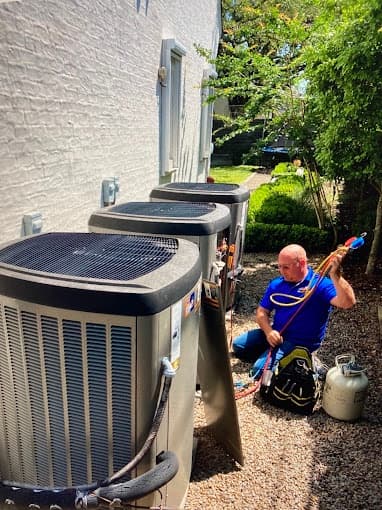
The old equipment comes out and the refrigerant is recovered properly. New line set connections are brazed with nitrogen flowing through the pipe so the inside of the tubing does not scale. The system is pulled into a deep vacuum to remove moisture, then the charge is weighed in and verified by measurement.
Before we leave we commission the system: airflow set, temperature split confirmed, drain line and safety switch tested, thermostat configured, outdoor unit level on its pad. Permit and inspection rules differ between the City of Houston and the surrounding counties, so ask what applies at your address.
When you should not replace anything
If a system in its first decade needs a capacitor, a contactor or a fan motor, that is a repair, not a reason to buy a new air conditioner. If your problem is one room that never gets cool, that is usually a duct or airflow problem and a new condenser will not fix it. We would rather do the repair and see you again in ten years.
What we look at before quoting a system
- Load, not tonnageSize from the house itself rather than copying whatever was installed last time.
- Duct conditionInspect attic runs for leaks, crushed sections and missing insulation.
- Return airMeasure whether the returns can actually feed the system you are considering.
- Electrical serviceConfirm the breaker, disconnect and wire size suit the new equipment.
- Condensate pathCheck the primary drain, secondary pan and where an overflow would end up.
- Humidity strategyDecide how the system will run long enough to dry the house, not just chill it.