
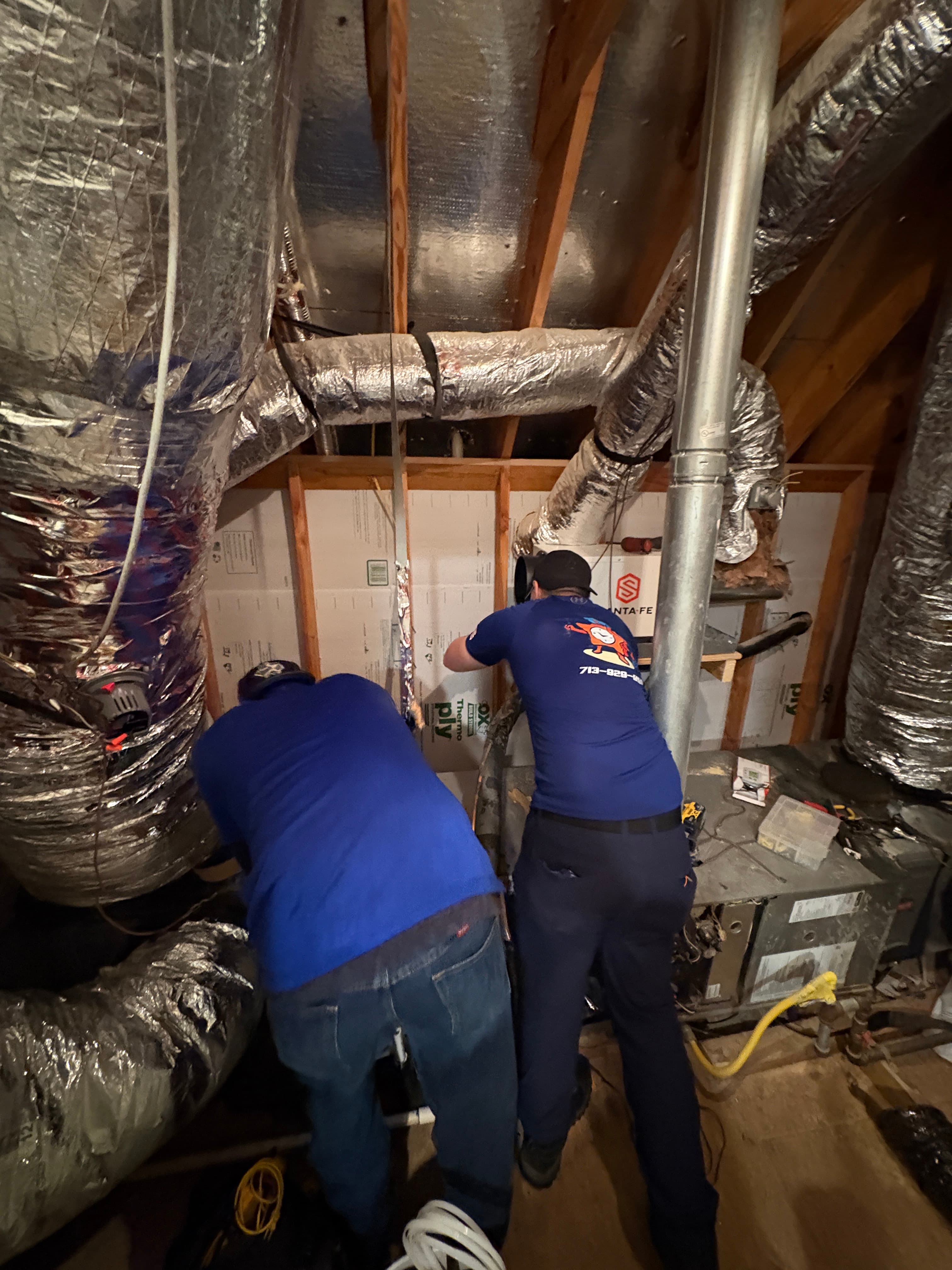
What we measure and why
The first number is total external static pressure, taken across the air handler. It tells us how hard the blower is working against the duct system, the filter, and the coil. A system running well above what the blower was rated for has a restriction problem, and no damper adjustment fixes that.
Then we take airflow at each supply register and check the temperature split across the coil. Room by room readings tell us where the air is actually going, which is usually not where the original installer assumed.
What balancing can fix
If the system moves enough total air and simply distributes it badly, balancing works. We adjust branch dampers at the trunk where they exist, correct register and grille sizing where they choke a run, and redistribute air toward the rooms that are short.
That is a real fix for the classic complaint: a back bedroom running several degrees warmer than the hallway where the thermostat lives, in a house where every other room is fine.
What balancing cannot fix
If the total airflow is not there, moving it around only decides which room suffers. An undersized trunk, a crushed flex run, a collapsed return, or a coil packed with dust are capacity problems. We will tell you which one you have rather than sell a balance that will not hold.
Attic heat gain is the other limit. A long, poorly insulated run through a 130 degree attic delivers air that has already picked up heat before it reaches the register. The fix there is duct repair, not a damper.
Return air is half the system
Most Houston houses have one or two central returns and bedroom doors that close. When a door shuts, the supply keeps pushing air into the room and the return cannot pull it back out. The room pressurizes, airflow into it drops off, and the rest of the house goes slightly negative and starts pulling attic air through every gap it can find.
Transfer grilles, jump ducts, or an undercut at the door solve this without much hardware. We check the pressure difference with the doors closed, because that is how the house actually operates at night.
What we measure on a balancing visit
- Total external staticMeasured across the air handler and compared to the blower's rating.
- Register airflowInstrument readings at each supply, not a hand held up to the vent.
- Filter and coil restrictionPressure drop across each, which often explains a system wide shortage.
- Damper locationsWhich branches have accessible dampers and which need them added.
- Closed door pressureRoom pressure with bedroom doors shut, the real operating condition.
- Room temperature spreadThe difference between the worst room and the thermostat location.