
Your air conditioner only dehumidifies while it runs
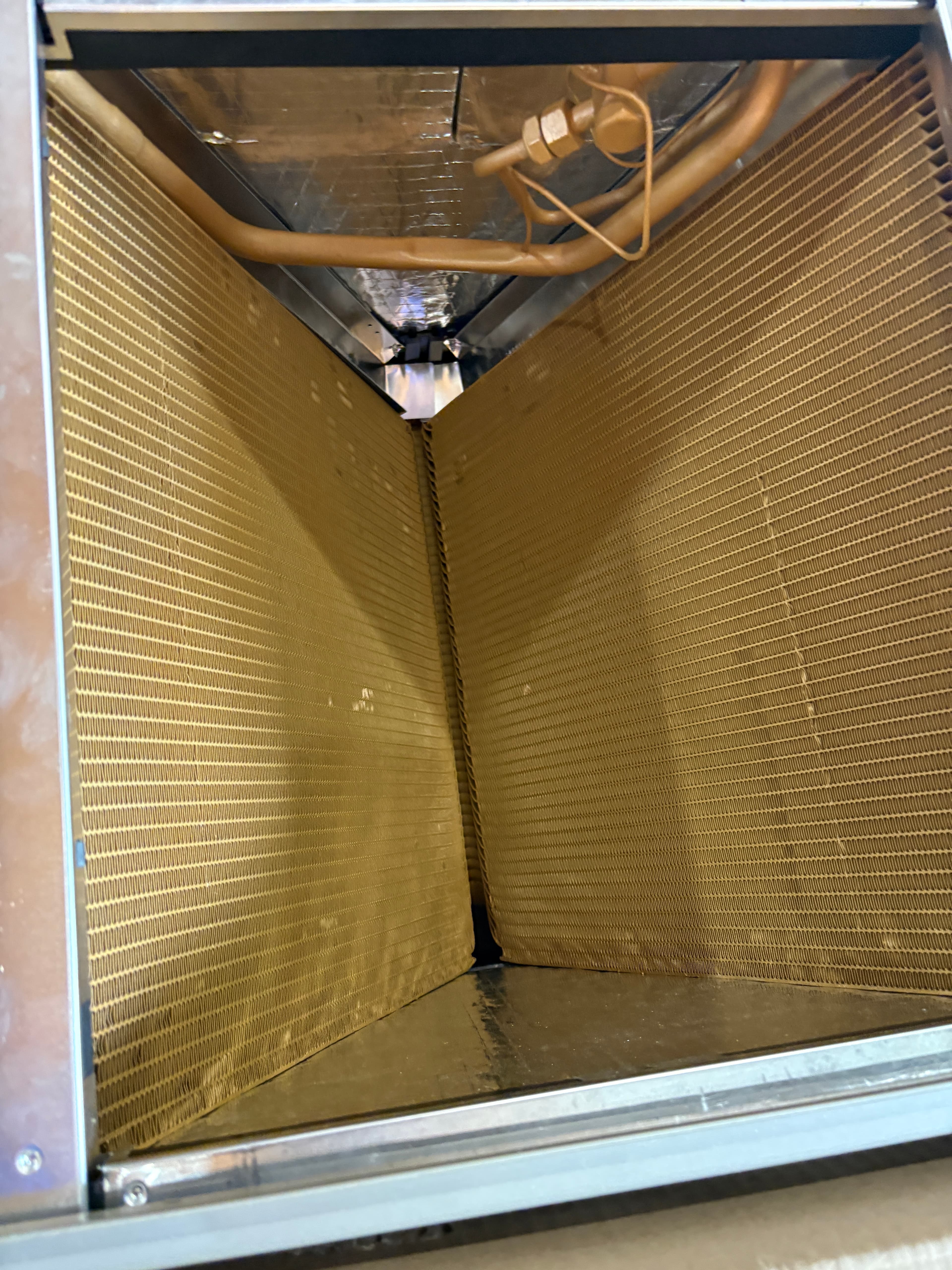
An air conditioner removes moisture as a side effect of cooling. Air passes over a cold coil, water condenses on the fins, and it drains away. None of that happens when the compressor is off.
So the moisture your system removes is tied to how long it runs, not to how big it is. In spring and fall, when it is 80 degrees and soaking outside, the house reaches the setpoint in a few minutes and shuts off. The temperature is satisfied and the moisture stays behind.
Oversized equipment makes it worse
A larger system cools the house faster, which means shorter run cycles, which means less moisture removed. An oversized air conditioner in Houston produces a cold, clammy house and short cycling that is hard on the compressor.
What a whole house dehumidifier does
A ducted dehumidifier is an independent machine with its own coil, compressor, and blower. It pulls air from the house, condenses moisture out of it, drains that water, and returns drier air to the supply side. It runs on its own humidity control, whether or not the air conditioner is calling.
That decouples humidity from temperature. Once humidity is under control, most people find they are comfortable at a higher thermostat setting than they used to run. That is a real comfort change, and we can explain it without attaching a savings percentage to it.
What to fix first, so it is not fighting the house
A dehumidifier installed on a leaky house runs constantly, because it is drying outdoor air as fast as the house pulls it in. Before we quote one we look for supply and return leaks in the attic, a leaking air handler cabinet, a stopped condensate drain, and bath fans or dryer vents terminating in the attic.
Sometimes closing those gaps solves the entire complaint. When it does not, at least the unit you buy is sized for your house rather than for your house plus the outdoors.
Installation details
The unit needs service access, a condensate drain routed to a safe termination, and its own circuit. Pulling from a central return and delivering into the supply plenum is common, and some houses do better with a dedicated return from the problem area.
Control integration matters too. The dehumidifier and the thermostat should not work against each other. To talk through what your house needs, call us at (713) 929-9595.
What we check on a humidity call
- Humidity over timeA logged reading through a full day, not a number off the thermostat.
- Cycle lengthHow long the system runs per cycle, which sets how much moisture it removes.
- Equipment sizingWhether the existing system is oversized for the load it serves.
- Duct and cabinet leakageAttic air pulled into the system, bringing its moisture along.
- Condensate drainWhether the water the system removes is actually leaving the building.
- Exhaust terminationsBath fans and dryer vents dumping moist air into the attic.