
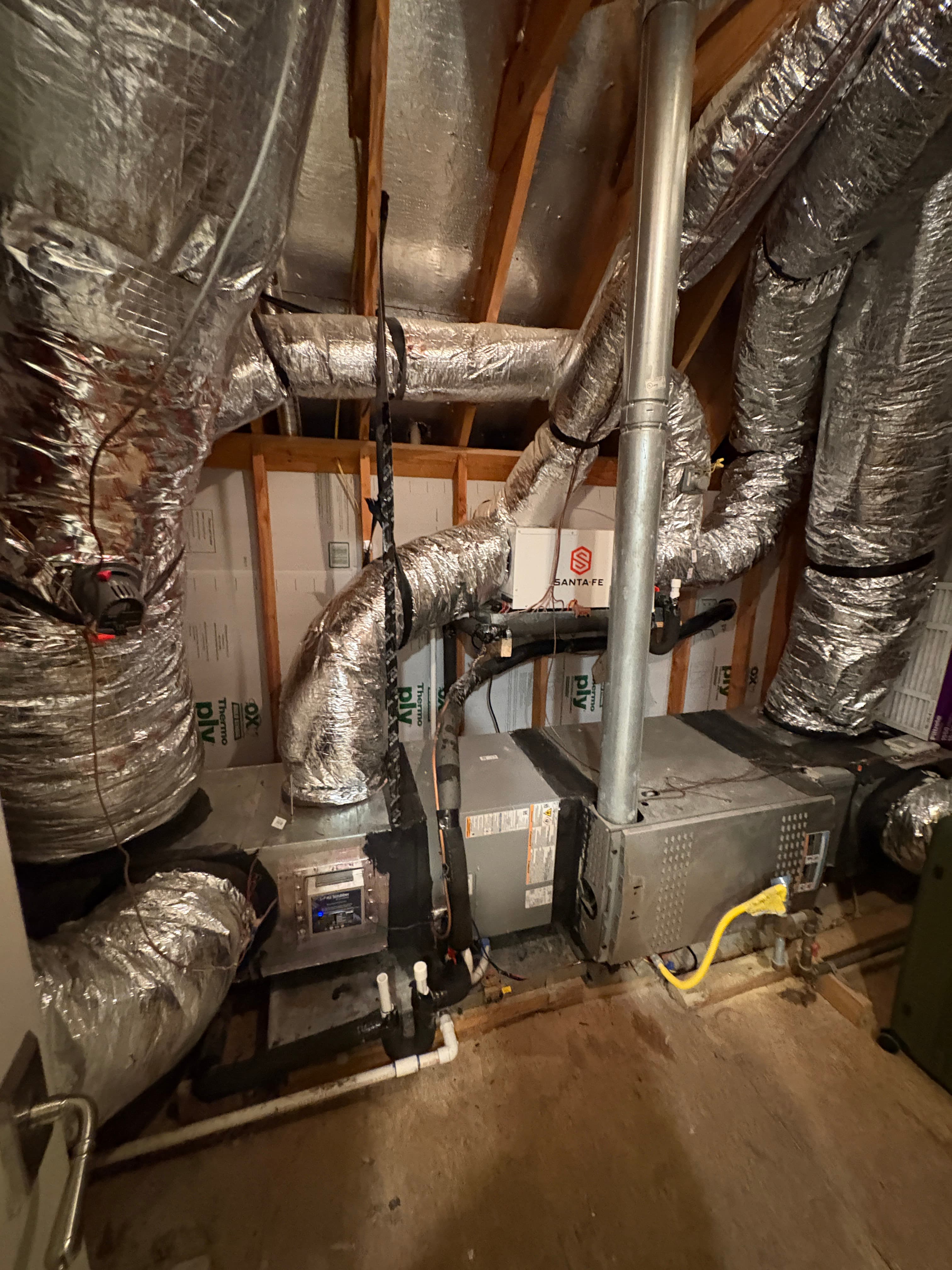
The blank screen, in the order we check it
Batteries first, if it takes them. Then the breaker and the service switch at the air handler, because a thermostat is powered from the equipment transformer, and if the equipment lost power the thermostat goes dark with it.
Then the low voltage fuse on the control board. It blows when a wire shorts, often where a thermostat wire rubbed through against sheet metal at the air handler. Replacing the fuse without finding the short gets you a second blown fuse.
The float switch, which is the one nobody expects
A very common cause of a system that will not run, especially after a stretch of humid or rainy weather, is a condensate safety switch doing exactly its job. When the primary drain stops or the trap dries out and the pan fills, the float switch opens the control circuit and shuts the system down before water reaches your ceiling.
Depending on how it is wired, that leaves the thermostat blank or powered but unable to start anything. A stopped or dry trap is one of the most common and most preventable service calls we run. Clearing it and correcting the trap is the actual repair. The thermostat was never broken.
Placement, and why the number does not match the feel
A thermostat reads the air at its own location. Put it on an exterior wall, in direct sun through a west facing window, in a hallway with no supply nearby, or directly in the path of supply air, and it reports a temperature that has little to do with where you are sitting.
Humidity is the other half of this in Houston. A room at 74 degrees and 65 percent relative humidity feels worse than a room at 76 and 45 percent, so a thermostat can be perfectly accurate while the house still feels wrong. That fix is on the humidity side, not on the wall.
Wiring, staging, and heat pumps
Smart thermostats generally want a common wire for continuous power. Where there is no C wire, an adapter at the equipment or a new wire pull is the reliable answer. Power stealing through the load circuit is where a lot of intermittent smart thermostat behavior begins.
Heat pumps add the reversing valve wire, and whether it energizes in cooling or in heating depends on the equipment. Get that setting backward and the system blows hot when you call for cool.
Installation and setup
A new thermostat is not finished when it powers up. It gets configured for your equipment and staging, then verified in every mode. We answer the phone 24 hours a day at (713) 929-9595, and Perla and the office team can usually get you scheduled the same day.
What we check on a thermostat call
- Power pathBatteries, breaker, service switch, transformer, and low voltage fuse.
- Condensate float switchWhether a safety opened the circuit because the drain stopped.
- Wire conditionThe full run at both ends: rubs, pinches, and corroded terminals.
- PlacementSun, exterior walls, and whether the location represents your living space.
- ConfigurationStages, reversing valve setting, and fan behavior set for your system.
- Mode verificationEvery mode and stage confirmed to operate after any change.